A dog attack in Irving can leave you with deep puncture wounds, permanent scarring, and a fight with the owner's insurance company. Texas does not have a dog bite statute, so your right to compensation depends on what the owner knew and what the owner did. An Irving dog bite lawyer at Garcia, Garcia & Mullen Criminal Defense & Injury Lawyers can investigate the animal's history, the owner's conduct, and the local ordinances that were broken.
We handle these claims on a contingency fee basis and offer a free case evaluation. Our Irving office serves injured people across Dallas County and the surrounding metroplex. Call (214) 214-1000 to talk with our team about your injuries and your options.
Dog bite claims turn on evidence that disappears quickly. Our team requests the Irving Animal Services incident report, tracks down prior complaints about the same animal, and identifies every homeowner or renter policy that may apply. Photographs of the gate, fence, or leash matter as much as the medical file.
Injury documentation is where these cases are often won or lost. A member of our team practiced as a registered nurse in emergency room trauma care before this work, and an emergency medicine consultant reviews client records alongside our attorneys. That background helps us explain infection risk, nerve damage, and scar revision surgery in terms an adjuster cannot brush aside.
Animal attacks are one part of our broader work as an Irving personal injury lawyer team. Whether the dog belonged to a neighbor, a landlord's tenant, or a business, we look at every party who had control over it. Adjusters often call within days of an attack, and we handle those conversations so you can focus on treatment.
Texas has never passed a civil dog bite statute. Liability comes from court decisions, and the controlling case is Marshall v. Ranne, decided by the Texas Supreme Court in 1974. That decision gives injured people two separate paths, and a strong claim often uses both.
An owner is liable for harm caused by an animal with dangerous propensities when the owner knew or had reason to know about them. The owner's level of care does not matter under this theory. Even someone who took real precautions can be held responsible once that knowledge is established.
Proof of knowledge does not require a previous bite. Prior lunging, snapping, growling at passersby, complaints made to animal control, or a warning sign posted on the fence can all support it.
The same decision recognized that the owner of an animal with no history of viciousness can still be liable for negligent handling. This is the path many Irving cases take, because owner knowledge is often hard to document. An unlatched gate, a dog running loose at a park, or a tenant who let a dog roam an apartment breezeway can each support a claim.
Negligence requires proof that the owner owed a duty of care, breached it, and caused your injuries. Our resource page on how negligence works under Texas law breaks down each element.
Irving prohibits animals from being at large anywhere inside the city limits, even when the owner is present, with the city dog park as the exception. Dogs must be restrained by a properly fitted leash, chain, collar, or harness held by the owner. A violation of Irving's animal enforcement rules at the moment of an attack is strong evidence of negligent handling.
Reporting protects both your health and your claim. The city asks that any bite that breaks the skin be reported to Irving Animal Services, and that any captured animal be quarantined or tested for rabies. That report also preserves the owner's identity and address while memories are still fresh.
State law takes over from there. Under Texas rabies control rules, a dog that bites a person is quarantined and observed for 10 days after exposure. That process creates a dated official record of the attack.
A separate track runs alongside your injury claim. Once an animal control authority determines that a dog is dangerous, Chapter 822 of the Texas Health and Safety Code gives the owner 30 days to meet several requirements. The owner must register the animal, restrain it with a leash or keep it in a secure enclosure, and carry at least $100,000 in liability coverage for bodily injury.
That insurance requirement can matter a great deal to an injured person. A later attack by a dog already found dangerous is a Class C misdemeanor under Section 822.044.
Section 822.005 reaches further. When criminal negligence in securing a dog leads to an unprovoked attack off the owner's property that causes serious bodily injury, the owner commits a third-degree felony. The offense rises to a second-degree felony when the attack causes death, and families in that situation should speak with an Irving wrongful death lawyer about the separate claim available to them.
No lawyer can quote a figure before the medical picture is clear. Value depends on the depth and location of the wounds, whether surgery is required, how visible the scarring is, and whether the bite caused nerve or tendon damage.
Recoverable economic damages include emergency treatment, reconstructive and scar revision surgery, physical therapy, lost income, and future care costs. Non-economic damages cover pain and suffering, disfigurement, and the lasting fear of dogs that often follows an attack. Children bitten on the face frequently need staged procedures over several years, and those future costs belong in the claim.
Homeowner and renter policies are the usual source of recovery. Some policies exclude certain breeds or cap animal liability, so we identify the available coverage early, because those limits shape strategy. Health insurers and treating providers may also assert liens against a recovery, and we account for those when evaluating any offer.
Owners and insurers often argue that the injured person provoked the dog, trespassed, or ignored a posted warning. Texas answers that with proportionate responsibility. Under Section 33.001 of the Texas Civil Practice and Remedies Code, a person may not recover damages if their percentage of responsibility is greater than 50 percent.
At 50 percent or less, recovery is reduced by that share rather than eliminated. Because a single percentage point can decide the outcome, we challenge fault arguments early with photographs, witness accounts, and the animal's documented history.
Section 16.003 of the Civil Practice and Remedies Code requires suit to be brought not later than two years after the day the cause of action accrues. For most dog attacks, that period starts on the date of the bite.
Limited exceptions exist, including tolling for injured children. Waiting is still risky. Animal control records get purged, witnesses move away, and the dog may be rehomed before anyone photographs the enclosure it escaped.
We handle dog attack claims on a contingency fee basis, so attorney fees are paid from a recovery under the signed agreement rather than up front. The case evaluation is free, and you can ask about our exact fee terms during that conversation.
That depends on the injuries and the insurance available. Puncture wounds that require stitches, carry infection risk, or leave visible scarring usually justify a closer look. A short conversation costs nothing and tells you whether a claim is practical.
There is no reliable average, and any firm quoting one is guessing. Outcomes track medical costs, scarring, lost income, and available policy limits. Two bites with similar wounds can resolve very differently depending on the insurance behind them.
Yes. A prior bite is not required. You can proceed on a negligent handling claim by showing that the owner failed to restrain or control the dog, and that earlier growling, lunging, or animal control complaints can also establish knowledge of the danger.
These claims are typically paid through a homeowner or renter insurance policy rather than directly by the person. That distinction is worth understanding before you decide not to pursue anything. We can explain how the coverage usually works.
Get medical care, photograph the wounds and the location, and identify the owner and the dog. Report the bite to Irving Animal Services so an official record exists. Then contact a lawyer before giving any recorded statement to an insurer.
An Irving dog bite lawyer at Garcia, Garcia & Mullen can review what happened, pull the animal control file, and explain the options available to you. Founding partners Lukas Garcia, Courtny Garcia, and Jim Mullen lead a team that handles serious injury claims across Irving and the wider Dallas-Fort Worth area. We work on a contingency fee basis, and the case evaluation is free.
Call (214) 214-1000 or reach us through our contact page to get started. The sooner we begin, the more evidence we can preserve.


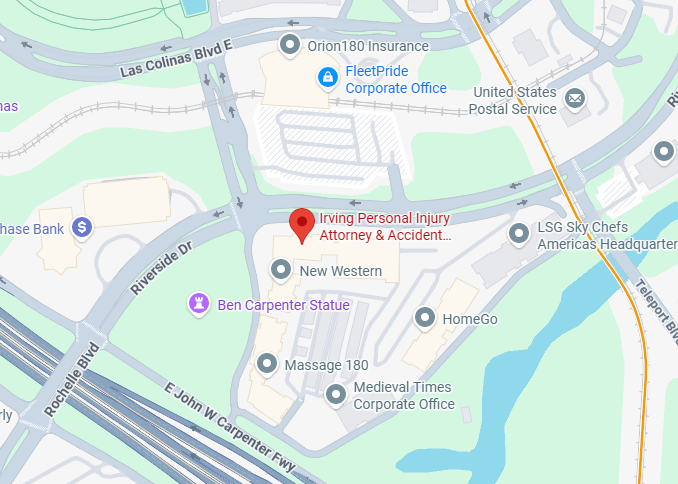 View Map/Directions


Phone: (214) 214 1000
Phone: (214) 214 1000