Texas law has no charge called domestic battery, but the accusation behind that search is real. Police in Irving file these cases as assault, with a family violence allegation attached to the paperwork. That allegation drives the penalty range, your firearm rights, and whether the record can ever be sealed.
An Irving domestic battery lawyer at Garcia, Garcia & Mullen Criminal Defense & Injury Lawyers can tell you what the state actually filed against you and what it has to prove. Our criminal defense team handles family violence allegations throughout Irving and Dallas County, from the first bond setting through trial. Call (214) 214-1000 to talk with us about the charge you are facing.
The offense is assault. Under Texas Penal Code § 22.01, a person commits assault by intentionally, knowingly, or recklessly causing bodily injury to another. The statute also covers threatening someone with imminent bodily injury.
A third form involves physical contact that the other person would find offensive or provocative.
Nothing in that statute mentions a spouse, a partner, or a home. The family violence label comes from a separate place.
Many states split these accusations into two offenses, assault and battery. Texas uses one assault statute instead, which is why searches for a battery charge often return information written for other states. Reading the wrong state's law can leave you badly misinformed about what you are facing here.
Texas Family Code § 71.004 defines family violence as an act by one family or household member against another. The act must be intended to result in physical harm, bodily injury, assault, or sexual assault. A threat that reasonably places the person in fear of imminent harm also qualifies, and the statute expressly excludes defensive measures taken to protect oneself.
Prosecutors pair the two. You are charged with assault, and the family violence allegation rides alongside it. For protective orders and what happens in the hours after an arrest, our Irving domestic violence attorney page covers that ground in detail.
The relationship categories are broader than most people expect. Under Texas Family Code § 71.003, family includes people related by blood or marriage, former spouses, the parents of the same child whether or not they married, and foster parents and foster children.
Section 71.005 defines a household as people living in the same dwelling, related or not. Section 71.006 extends that to someone who used to live there, and Section 71.0021 covers dating relationships.
A roommate, an ex, or someone you dated months ago can all fall inside these definitions.
Where your case lands on the scale depends on the alleged conduct and your record. The punishment ranges are set forth in Texas Penal Code Chapter 12.
One detail catches people off guard. Under Section 25.11, jurors do not have to agree on which specific incidents occurred, only that two or more happened inside the 12-month window.
The sentence is not the whole story. Under Article 42.013 of the Texas Code of Criminal Procedure, when a court determines that an offense involved family violence, it must enter an affirmative finding of that fact in the judgment.
That finding attaches to the case permanently and reaches into parts of your life the courtroom never discusses.
Your firearm rights are the first casualty. Texas Penal Code § 46.04(b) applies after a Section 22.01 conviction punishable as a Class A misdemeanor involving a family or household member. It makes possessing a firearm an offense before the fifth anniversary of the later of two dates: Release from confinement or release from community supervision.
Federal law imposes separate and longer restrictions.
Sealing the record is the second problem. Texas Government Code § 411.074 bars an order of nondisclosure when the offense involved family violence or when the court makes an affirmative family violence finding.
Custody is the third. Texas Family Code § 153.004 restricts what a judge may order. A court may not appoint joint managing conservators when credible evidence shows a history or pattern of physical abuse by one parent against the other parent, a spouse, or a child.
Immigration status and professional licensing deserve attention as well. Federal immigration law treats qualifying domestic violence convictions seriously, and licensing boards review criminal history in their own way. If either applies to you, tell us early so those consequences shape the strategy rather than surprise you later.
Our work starts with the evidence the state has not yet shown you. Early requests usually include:
Those materials frequently tell a different story than the offense report. Recordings capture what people said before anyone had time to shape an account, and photographs taken that night can contradict an injury described in writing days later.
From there, we test the elements. The state has to prove bodily injury, or a threat, or offensive contact, and it has to prove the relationship category it alleged. Where the evidence shows you were protecting yourself, Section 71.004 excludes defensive measures from the definition of family violence.
Prior convictions get the same scrutiny. An enhancement to a felony depends on proof of a qualifying earlier conviction, and that proof is not automatic.
Allegations of continuous violence under Section 25.11 require a separate approach because each alleged incident must be challenged on its own facts. Our Irving criminal defense lawyer team builds the defense around the weakest links in the state's case rather than a single argument.
Irving sits primarily in Dallas County, so these cases are filed there. According to Dallas County, criminal cases are handled at the Frank Crowley Courts Building, 133 N. Riverfront Blvd., in Dallas, where the District Clerk maintains felony records and the County Clerk handles misdemeanor cases.
Misdemeanor assault cases go to the county criminal courts. Felony charges, including strangulation allegations and continuous violence counts, are assigned to the criminal district courts in the same building.
We also represent clients through our Dallas domestic violence lawyer practice.
No. The charging instrument will say assault, with a family violence allegation attached under the Family Code definition.
Yes. Household members under Section 71.005 include people who share a dwelling without being related, and Section 71.0021 covers dating relationships.
It can. A Class A misdemeanor allows up to one year in county jail, and a strangulation allegation moves a first accusation into the felony range.
It is entered in the judgment under Article 42.013 and follows the case afterward, affecting firearm eligibility, record sealing, and conservatorship decisions.
Not the way many people assume. Section 411.074 bars nondisclosure in cases involving family violence, so the usual sealing path may be unavailable.
Texas restores that ability five years after the later of your release from confinement or supervision. Federal restrictions are separate and stricter.
The allegation is assault, the label is family violence, and the consequences reach well past the courtroom. Talking to an Irving domestic battery lawyer before your next setting gives you the clearest picture of what the state has and what your options are.
Lukas Garcia has practiced criminal defense his entire legal career and is a second-generation state and federal criminal defense attorney. Garcia, Garcia & Mullen defends family violence allegations across Irving and Dallas County.
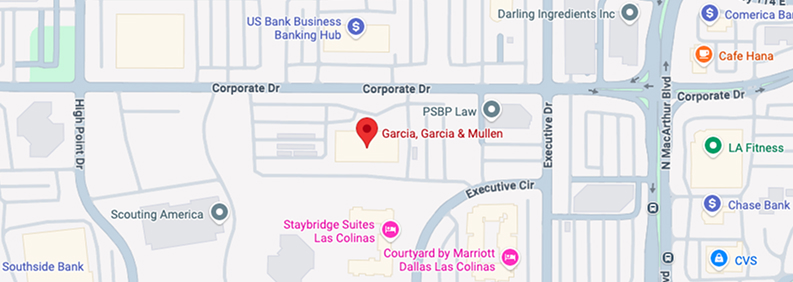
Call (214) 214-1000 or contact our Irving office to schedule a free case evaluation.


 View Map/Directions



Phone: (214) 214 1000
Phone: (214) 214 1000