An Arlington criminal defense lawyer protects your rights from the first police contact through the final court date. At Garcia, Garcia & Mullen Criminal Defense & Injury Lawyers, we defend people facing misdemeanor, felony, and federal charges in Arlington and throughout Tarrant County. We challenge weak evidence and hold police and prosecutors to the rules they must follow.
A single arrest can threaten your job, driver's license, record, and freedom. Prosecutors begin building their case right away, and the sooner we get involved, the more options you may have. Call (214) 214-1000 to schedule a free case evaluation with our Arlington criminal defense team.
Criminal defense is not a side practice at our firm. Founding attorney Lukas Garcia has practiced criminal defense for his entire legal career, and he is a second-generation state and federal criminal defense attorney. He knew in law school that his career would be spent defending people accused of crimes.
That focus shapes how we handle every case for clients charged in Arlington, TX:
Our criminal defense office is in Irving, and we represent clients across Tarrant County. Wherever your Arlington case is filed, we give it the same attention we would give a close family member's case.
Every client has a different background, different goals, and different stakes. We start by learning what matters most to you, because those details shape the right defense strategy.
We defend Arlington clients against state and federal charges at every level. Each charge carries its own risks, so we build a defense around the specific facts, evidence, and court involved. Whether you received a citation or face a felony, the steps you take early can affect the options available later.
A driving while intoxicated (DWI) or driving under the influence (DUI) arrest can trigger a separate license case. The Texas Department of Public Safety gives you only 15 days after being served with a suspension notice to request a hearing. Our DWI defense team reviews the stop, testing, and video.
Assault cases often come down to conflicting stories, unclear injuries, and 911 calls made in the heat of the moment. A family violence accusation can also upend your home life overnight. Our family violence defense team investigates what actually happened before the prosecution's version of events takes hold.
Drug cases often turn on how police found the substance. We examine whether the stop, the search, and any claimed consent met constitutional standards. Our team also reviews lab testing and chain-of-custody records, because a flawed search or a broken evidence trail can change the direction of a drug case.
Theft accusations range from retail shoplifting stops to employee and business disputes. We scrutinize receipts, store video, property valuations, and whether the evidence actually shows intent. A theft conviction can raise questions about your honesty that follow you into job applications and background checks for years.
A sex crime allegation can damage your reputation long before any evidence is tested in court. We handle these cases with discretion, gather digital records and witness accounts, and challenge forensic conclusions that do not hold up. Acting quickly helps protect both your case and your name.
Charges involving weapons, serious injury, or robbery carry some of the most severe consequences in the criminal system. We look closely at self-defense, eyewitness reliability, and the physical evidence. When the facts support a justification defense, we raise it early and press it at every stage.
A federal case can begin with a long investigation by federal agents before anyone is arrested. Federal court also follows its own procedures and sentencing rules. Our federal criminal defense team defends drug, fraud, and white-collar allegations from the earliest investigation stage forward, including target letters and agent interviews.
When a child is arrested in Arlington, parents need clear answers fast. Juvenile cases follow different procedures from adult cases, and the stakes include your child's record, schooling, and future. We explain every option in plain terms, including whether a diversion program may be available for your child.
Arlington sits in Tarrant County but runs its own municipal court, so the court that hears your case depends on the charge. Knowing where your case is headed shapes every early decision we make.
Under Section 29.003 of the Texas Government Code, a municipal court shares jurisdiction with justice courts over state criminal cases that arise inside city limits and are punishable by fine only. The same section gives municipal courts authority over city ordinance violations.
In practice, Class C misdemeanor citations issued in Arlington are handled by the Arlington Municipal Court rather than the county courts. A Class C case may seem minor, but it still deserves a careful look before you pay or plead.
Most other misdemeanor charges from Arlington are heard in one of Tarrant County's 10 county criminal courts. Those courts sit inside the Tim Curry Criminal Justice Center at 401 W. Belknap Street in Fort Worth. An Arlington arrest often means your court dates will be in Fort Worth, not Arlington.
Felony charges go to one of Tarrant County's 11 district courts handling felony cases, which are also located at the Tim Curry Criminal Justice Center. Because Arlington and Fort Worth felony cases move through the same courthouse, the Tarrant County preparation we bring as a Fort Worth criminal defense lawyer applies to every Arlington case.
Under Section 124 of Title 28 of the U.S. Code, Tarrant County falls within the Fort Worth Division of the Northern District of Texas. Federal charges from Arlington are generally filed in federal court in Fort Worth. Our founding attorney is admitted to practice in the Northern District, so your defense does not stop at the state courthouse door.
The hours after an arrest move fast, and what you say during that time can follow your case all the way to trial.
Article 15.17 of the Texas Code of Criminal Procedure requires the person holding you to bring you before a magistrate without unnecessary delay, and no later than 48 hours after the arrest. The magistrate must explain several rights, including:
The magistrate must also give you reasonable time to consult a lawyer. After checking whether you are already on bail for another offense, the magistrate admits you to bail if the law allows it.
Knowing these rights is not the same as using them. Investigators may still ask questions after booking, so stay calm, decline to discuss the case, and ask for your lawyer.
If someone you love was just arrested, write down where they are being held and any booking details you receive. Avoid discussing the facts of the case with them by phone, and call us so we can explain what comes next.
After the magistrate hearing, your case moves to municipal court, county criminal court, or district court, depending on the charge. Some people may qualify for deferred adjudication or a Tarrant County diversion program, and we evaluate those options from the start. Each option has trade-offs, so we explain how it could affect your record and your future before you commit.
Every case is different, but our process follows a consistent path from your first call through the final resolution.
Throughout the case, we return calls, answer questions, and explain every offer before you decide.
No, our criminal defense office is at 1212 Corporate Drive, Suite 360, in Irving, and we represent clients throughout Tarrant County, including Arlington. Tarrant County's misdemeanor and felony courts sit at the Tim Curry Criminal Justice Center in Fort Worth, so many court dates happen there regardless. You can reach our team by phone 24/7 to get started.
Yes. Innocent people get arrested, and police reports do not always tell the full story. A lawyer can stop you from making statements that get misread, preserve evidence that supports your account, and challenge the prosecution's case from day one. Waiting to see what happens gives the other side time to shape the narrative without you.
Fees depend on the charge, the court, the amount of evidence, and whether the case goes to trial. A fine-only citation usually requires far less work than a felony or federal case. During your free case evaluation, ask how our fee would apply to your specific charge and what the representation would include.
Not long. According to the Tarrant County criminal courts, eligible defendants must apply for the Deferred Prosecution Program and the Felony Alcohol Intervention Program within 60 days of filing the case. The First Offender Drug Program requires an application within 90 days, and the county states there are no exceptions.
Sometimes. Chapter 55A of the Texas Code of Criminal Procedure allows expunction in specific situations, such as an acquittal or certain cases where charges are never filed or are dismissed. People who complete deferred adjudication may qualify for an order of nondisclosure under Subchapter E-1 of Chapter 411 of the Texas Government Code, which keeps criminal justice agencies from releasing the record publicly.
Take it seriously. Keep the citation, note your court date, and talk with a lawyer before you pay or enter a plea. Depending on your age and situation, the Arlington Municipal Court offers options such as diversion, teen court, and community court, and we can help you decide which path fits.
The decisions you make in the first days after an arrest can shape everything that follows, and you should not make them alone. Garcia, Garcia & Mullen Criminal Defense & Injury Lawyers stands between you and the prosecution at every stage of your case. We investigate, challenge, and prepare so you are never facing the system on your own.
Call (214) 214-1000 to speak with an Arlington criminal defense lawyer about your charges and your options. Our phone line is available 24/7, and your free case evaluation is confidential. You can also contact our team online to get started.


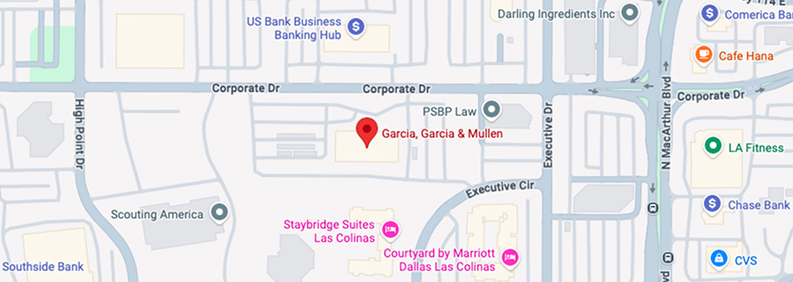 View Map/Directions




Phone: (214) 214 1000
Phone: (214) 214 1000