A serious injury changes your finances before it changes anything else. Garcia, Garcia & Mullen Criminal Defense & Injury Lawyers represents injured people throughout Kaufman County, and you can meet with our team at our office on North Washington Street in the county seat. Our injury practice covers vehicle collisions, 18-wheeler wrecks, motorcycle and rideshare crashes, premises injuries, and wrongful death.
Insurance companies begin building their file within days, usually before you have finished treatment. A Kaufman personal injury lawyer can document what you have lost while that record is still forming. Call (214) 214-1000 to schedule a free case evaluation.
Our firm keeps an office in Kaufman at 307 N Washington St, Suite 212B, available by appointment. Claims from this county are filed and resolved here, and counsel who already appears in these courts removes a layer of distance from your case.
Medical evidence decides most injury claims, and we read it from the inside. Jim Mullen, one of our founding partners, spent years in critical care trauma nursing at Grady Memorial in Atlanta and then as a charge nurse at Methodist Charlton in South Dallas. He went on to earn his law degree magna cum laude and is a member of The American Association of Nurse Attorneys.
That background changes the work. A chart that looks routine to an adjuster can reveal a delayed diagnosis, an inconsistent pain scale, or a treatment gap that needs explanation rather than concession. An emergency medicine physician also consults with our team on injury matters.
Our firm's experience reaches the other side of a serious wreck as well. Jim Mullen is a holder of a Commercial Driver's License (CDL). His commercial trucking knowledge tells us which records exist after an 18-wheeler crash, how quickly they can disappear, and what safety standards carriers and drivers are expected to meet.
Courtny Garcia, who also handles injury claims in this county, concentrates her practice on motor vehicle collisions, 18-wheeler cases, wrongful death, slip-and-fall, and premises liability. She is licensed in Texas and admitted in all four federal districts of the state. Having grown up in a small East Texas town, she works in this part of the state by choice rather than assignment.
Injury cases are handled on a contingency fee basis, with the exact terms set out in the agreement you sign before any work begins. Nothing is owed for the initial case evaluation.
Once we are involved, contact from the insurer runs through our office. Adjusters stop reaching you at work and between appointments, and requests for statements, authorizations, and records come to us for review first. That single change removes a source of pressure at the point when most people are least equipped to absorb it.
You will also know where your claim stands. What the insurer has produced, what your file still needs, and what each option actually means are things you should hear from your lawyer rather than discover months later.
Our practice covers the incidents that send people in this county to the emergency room. Each claim turns on a different set of records, and the sooner those records are requested, the more of them still exist to request.
Most injury claims in this county begin with a collision. We handle car accident claims involving rear-end impacts, intersection crashes, and rollovers. Our team gathers the crash report, scene photographs, vehicle data, and treatment records that connect the impact to the injury you are living with.
Commercial carriers preserve some records only briefly, and others only when someone asks in writing. In truck and 18-wheeler collisions, we move early to obtain driver logs, maintenance files, and electronic data, then compare what those documents show against federal and company safety requirements.
Riders and passengers face a different insurance picture than drivers do. We handle motorcycle crashes and rideshare claims involving Uber and Lyft vehicles, where available coverage can shift depending on whether the app was running and whether a passenger had been accepted.
Property claims turn on notice, meaning what the owner knew about a hazard and when. Our team requests incident reports, inspection logs, and surveillance video before footage is overwritten, which on many systems happens within weeks of a fall rather than months.
Losing a family member to someone else's negligence raises legal questions at the worst possible time. We handle wrongful death claims for surviving family members, and we explain who Texas law permits to file well before any deadline pressure arrives.
Three rules shape almost every injury claim in this state: the filing deadline, the way fault is divided, and the categories of loss the law recognizes. Each is written into the Texas Civil Practice and Remedies Code, and each can decide how much of your loss is recoverable.
Texas sets a 2-year statute of limitations for personal injury, measured from the day the cause of action accrues, under Section 16.003 of the Civil Practice and Remedies Code. When an injury results in death, that same 2-year period runs from the date of death rather than from the date of the incident.
Two years sounds generous until the work is laid out. Evidence must be preserved, treatment must be completed or projected, and liability must be established before a lawsuit is drafted. Waiting until the deadline approaches also removes the leverage that a fully documented claim carries in negotiations.
Texas divides responsibility rather than treating fault as all-or-nothing. Under Chapter 33 of the Civil Practice and Remedies Code, an injured person may not recover damages if his or her percentage of responsibility is greater than 50 percent. At or below that line, the court must reduce the award by a percentage equal to that share of responsibility.
The practical effect is direct. If your damages are found to be $200,000 and you are assigned 20 percent responsibility, the recoverable amount becomes $160,000. Cross 50 percent, and the recovery disappears completely, which is precisely why insurers work so hard to move that number upward.
Responsibility also gets spread among defendants. A defendant found more than 50 percent responsible is jointly and severally liable for the damages you can recover. A defendant may also ask the court to designate someone else as a responsible third party, and that motion must generally be filed by the 60th day before trial.
Texas separates compensation into two categories, defined in Chapter 41 of the Civil Practice and Remedies Code. Economic damages compensate for actual economic or pecuniary loss, while noneconomic damages compensate for harm that arises without an invoice attached.
Economic damages commonly include:
Noneconomic damages recognized by the statute include:
One statutory limit regularly surprises people. Recovery of medical expenses is restricted to the amount actually paid or incurred on your behalf rather than the amount originally billed, which makes billing statements, adjustments, and lien records worth assembling with care.
Gross negligence opens a further category. Where the evidence meets a higher standard of proof, exemplary damages may be available, and Texas caps those separately from the compensation described above.
Most court business in this county runs through the Kaufman County Justice Center at 1902 E US Highway 175. The county's trial courts include the 86th, 422nd, and 489th District Courts, along with County Court at Law and County Court at Law 2. Four justice of the peace precincts also serve the county.
Where a civil case is filed depends largely on the amount in controversy, with larger claims going to the district courts and smaller matters heard in the county courts at law or the justice courts. That routing affects the schedule your case follows and the procedures that apply to it.
The county added the 489th District Court as its third district court after House Bill 3474 was signed in June 2023. Kaufman County described the new court as a response to mounting caseloads and rapid population growth. For injured residents, that growth cuts both ways: more people and more traffic on the same roads, and courts processing more filings than they once did.
Filing suit is not the same as going to trial. Most injury claims resolve through negotiation, and a lawsuit often serves as the mechanism that forces disclosure and sets a firm date on the calendar.
Timing varies with the court and the complexity of the injuries. A claim involving completed treatment and clear liability can resolve in a matter of months, while a case with disputed fault, multiple defendants, or ongoing medical care can run considerably longer. We would rather explain that range honestly at the outset than promise a schedule the docket will not support.
Our team represents injured people throughout the county, including Terrell, Forney, Crandall, Kemp, Mabank, and the surrounding communities.
The days right after an injury shape the evidence available months later. The steps below protect your position while the record is still being created.
That last step deserves emphasis. Adjusters routinely request a recorded statement early, at a point when you may not yet know the full extent of your injuries, and those recordings resurface later when the value of the claim is disputed.
Be careful with early settlement offers as well. An offer that arrives before your treatment is complete is priced on incomplete information, and accepting it generally closes the claim for good.
Social media deserves its own mention. Posts and photographs are regularly pulled into injury files to argue that an injury limits someone less than claimed, so leave the accounts alone and tell your lawyer what is on them.
Two years from the day the cause of action accrues. In a case involving death, the 2-year period runs from the date of death instead.
Yes, provided your share of responsibility is 50 percent or less. Above that line, Texas law bars recovery entirely.
No honest answer exists on day one. Value depends on the severity of the injury, the treatment required, the income lost, the strength of the liability evidence, and the insurance coverage available to pay it.
Our injury cases are handled on a contingency fee basis, with the fee terms written into the agreement you sign. The case evaluation itself costs nothing.
Under Section 71.004 of the Civil Practice and Remedies Code, a wrongful death action is for the exclusive benefit of the surviving spouse, children, and parents of the person who died. Any one of them may bring the action for the benefit of all.
Most injury claims settle without a trial. Filing suit, though, is often what moves a stalled negotiation forward, because it imposes deadlines and disclosure obligations on the other side.
Medical bills do not pause while you decide what to do next. Garcia, Garcia & Mullen represents injured people and grieving families throughout Kaufman County. A personal injury lawyer from our firm can review what happened, explain the applicable deadlines, and lay out your options in plain terms.
Call (214) 214-1000 to schedule a free case evaluation, or reach us through our contact page. Bring whatever you already have, including the crash or incident report, photographs, medical records, and any correspondence from an insurance company. The earlier we see the file, the more room there is to work with it.


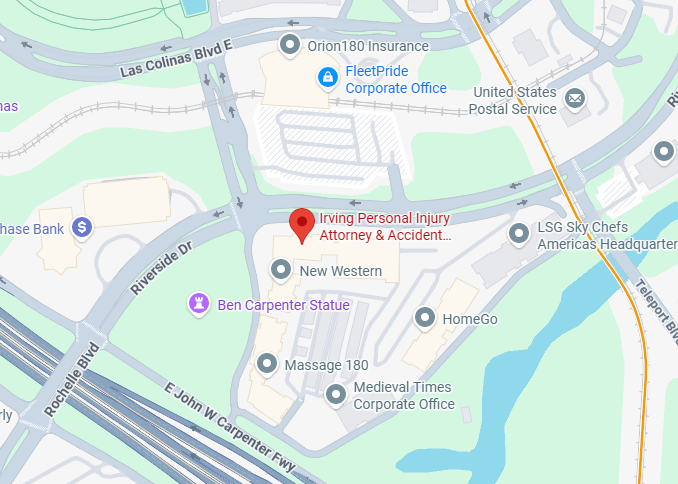 View Map/Directions


Phone: (214) 214 1000
Phone: (214) 214 1000