When your child is accused of a crime in Irving, the decisions you make in the first hours can shape the rest of their life. At Garcia Garcia & Mullen Criminal Defense & Injury Lawyers, our Irving juvenile crime lawyers defend young people in the Texas juvenile justice system and fight to protect their record, their freedom, and their future. The system moves quickly, and prosecutors treat these cases seriously. So should you. If your child has been detained or questioned by police anywhere in Irving or across North Texas, call us at (214) 214-1000 for a free case evaluation before you say anything to anyone.
A juvenile case is not a smaller version of an adult case. It runs under different rules, in a different court, with different consequences. Parents need a defense team that understands both the law and what is at stake for a young person's future.
Our attorneys defend juveniles in the courts that serve Irving, Dallas County, and the surrounding North Texas jurisdictions. We know how local prosecutors and judges approach these cases, and we use that knowledge to push for outcomes that keep your child moving forward.
We treat your child with respect and treat you as part of the defense. From the first phone call, our team explains what is happening, what the state must prove, and what options exist to protect your child. You will never be left guessing about where the case stands.
Early action often shapes the entire case. Our team moves quickly to review how the detention happened, whether your child's rights were respected during questioning, and what evidence the state actually has. Acting fast can open doors that close once a case is further along.
Every case gets a plan built around one goal: Protecting your child's future. That means challenging the evidence, questioning how the police handled the detention, and pushing for diversion, probation, or dismissal wherever the facts allow. We do not promise results, but we promise to fight for the best outcome available under the law.
Texas handles most cases against young people in a separate system built around age. Under Title 3 of the Texas Family Code, known as the Juvenile Justice Code, a "child" is generally a person who is at least 10 years old and under 17 at the time of the alleged conduct. Cases involving these ages usually stay in juvenile court rather than adult criminal court.
The law also uses different words. A young person is "detained" or "taken into custody" rather than arrested. The state alleges "delinquent conduct" instead of filing a criminal charge. A case that is proven ends in an "adjudication," not a conviction.
Those distinctions matter because they change the process and the possible outcomes. The Family Code separates two categories of behavior. Delinquent conduct covers acts that would be a crime if an adult committed them. Conduct indicating a need for supervision, often called CINS, covers behavior that is an issue only because of the young person's age, such as truancy or running away.
Once a young person is taken into custody, the case can move fast. If the court decides to hold your child, it must conduct a detention hearing shortly after, where a judge decides whether your child stays detained or returns home while the case proceeds. Having a lawyer at that early hearing can make a real difference in getting your child back home.
From there, a prosecutor reviews the referral and decides whether to file a petition, offer a diversion program, or dismiss the matter. Each of these early decision points is a chance to steer the case toward a better outcome, and each is a reason to have a defense attorney involved as soon as possible.
The system is built, at least on paper, around rehabilitation rather than punishment. That creates real opportunities for a strong defense. If your child is facing allegations anywhere in Irving, call (214) 214-1000 to talk through your options with a juvenile defense attorney.
Young people can face allegations for the same range of conduct as adults. Our team defends juveniles across the offenses most often referred to Texas juvenile courts.
Theft and Property Offenses. Shoplifting, vandalism, and theft allegations are among the most common juvenile referrals. We work to keep a single mistake from becoming a lasting record that follows your child into adulthood.
Drug and Alcohol Offenses. Possession of marijuana, vaping products, or other controlled substances can trigger a referral. We challenge how the search happened and push for treatment or diversion when appropriate.
Assault and Fighting. School fights and disputes can lead to assault allegations. We examine what actually happened, who started it, and whether the state can prove its case.
Weapons Allegations. Bringing a weapon to school or being accused of possessing one carries serious consequences. These cases demand a careful, aggressive defense from the start.
Sex Offenses. Allegations involving sexual conduct carry some of the harshest and longest-lasting consequences in the juvenile system. We handle these sensitive cases with discretion and a focus on protecting your child.
Alcohol and Driving Offenses. Underage drinking and driving-related allegations can affect a young person's license and record. We fight to limit the damage on both fronts.
The most serious cases carry a frightening possibility: The state can ask the juvenile court to move the case to adult criminal court. This is called certification, or waiver of jurisdiction.
Under Section 54.02 of the Texas Family Code, a juvenile court may transfer a child to adult court only in specific situations. A young person who is 14 or older can face transfer for a capital felony, a first-degree felony, or an aggravated controlled substance felony. A young person who is 15 or older can face transfer for certain second-degree, third-degree, and state jail felonies. The court must hold a hearing and find probable cause before it transfers any case.
Fighting certification is one of the most important things a defense attorney can do. Keeping a case in juvenile court protects your child from adult penalties and an adult record.
At the certification hearing, the court weighs factors such as the seriousness of the alleged offense and the young person's background before deciding whether to transfer the case. Our attorneys challenge the state's evidence, present the full context of your child's life, and argue for keeping the case where it belongs. The outcome of this single hearing can change everything about your child's future.
Texas law also offers another path for serious cases. Under the determinate sentencing statute, the juvenile court can handle certain violent or serious felony offenses within the juvenile system while still allowing a longer sentence. This can serve as an alternative to adult transfer and can keep more of your child's future within reach. Our team fights at every stage to keep your child out of the adult system.
Parents often feel lost the moment their child is taken into custody. Knowing the general path a case can take helps you make calmer, better decisions along the way.
A case usually begins with a referral to the juvenile probation department after police take a young person into custody. Intake staff then review the case and decide whether to release the child, offer an informal resolution, or move the matter forward.
If your child is held, a detention hearing follows quickly, and a judge decides whether your child stays in custody or returns home. From there, the prosecutor may file a petition alleging delinquent conduct, offer a diversion or deferred option, or decline to proceed.
When a case is contested, it can move toward an adjudication hearing, where the state must prove the allegations. If the case is proven, a separate disposition hearing decides the outcome. At each of these stages, our attorneys look for ways to challenge the evidence and protect your child's future.
Outcomes in juvenile court differ from adult sentencing. When a case is proven, the court holds a separate disposition hearing to decide what happens next, weighing the young person's needs alongside community safety.
Possible outcomes include probation, counseling, community service, and treatment programs. For more serious cases, a child can be committed to the Texas Juvenile Justice Department. The court has room to tailor an outcome to the individual young person.
Diversion and probation often keep a young person at home, in school, and on track. We push hard for these options whenever the facts support them, because the goal is to correct course, not derail a life.
Our attorneys work to show the court the full picture of your child, not just the allegation. That means presenting their background, their support system, and their potential. A strong disposition strategy can be the difference between a second chance and a lasting setback.
Many parents assume a juvenile record disappears automatically at 18. That is not always true, and getting it wrong can cost your child jobs, housing, and educational opportunities years later.
Texas law does allow many juvenile records to be sealed, sometimes automatically and sometimes by application, under Chapter 58 of the Family Code. Eligibility depends on the offense, the outcome, and the young person's later history. Serious felony adjudications and cases transferred to adult court are treated differently.
It is worth knowing that juvenile records in Texas generally are not subject to the same expunction process used for some adult arrests. Sealing is the primary tool, and the rules are specific. We help families understand what relief may be available and take the right steps to protect a child's record for the long term.
Texas juvenile courts generally handle cases involving young people who were at least 10 years old and under 17 at the time of the alleged conduct.
Tell your child to stay calm and to not answer questions or give any statement without a lawyer present. You have the right to seek counsel, and your child has the right to remain silent.
Juvenile court runs under Title 3 of the Texas Family Code and focuses more on rehabilitation than punishment. The terminology differs, the procedures differ, and the possible outcomes differ.
Not necessarily. Texas law allows many juvenile records to be sealed, in some cases automatically and in others by application, depending on the offense and the outcome.
The timeline depends on the offense, the court's schedule, and whether the case resolves through diversion, a plea, or a contested hearing. Some cases take longer when we challenge the evidence.
Yes. Even a first offense can carry consequences that affect school, future employment, and your child's record. Having an experienced juvenile defense attorney from the start gives your child the strongest chance at a fresh start.
When your child's future is on the line, you need a defense team that moves fast and fights hard. The Irving juvenile crime lawyers at Garcia Garcia & Mullen Criminal Defense & Injury Lawyers defend young people throughout Irving and North Texas, and we build every case around protecting your child's record, freedom, and future. Attorney Lukas Garcia and our team are ready to stand between your child and the consequences of a single mistake. Call (214) 214-1000 today for a free case evaluation and let us start protecting your child right now.


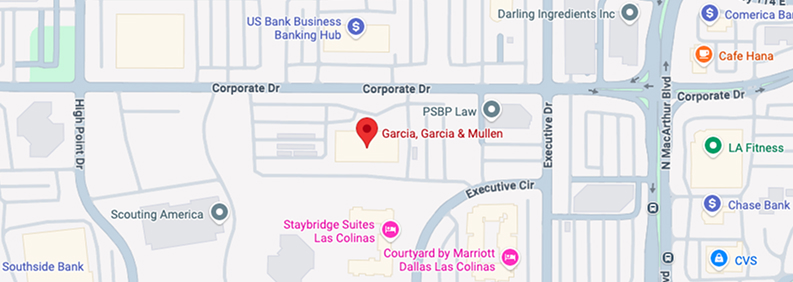 View Map/Directions



Phone: (214) 214 1000
Phone: (214) 214 1000